







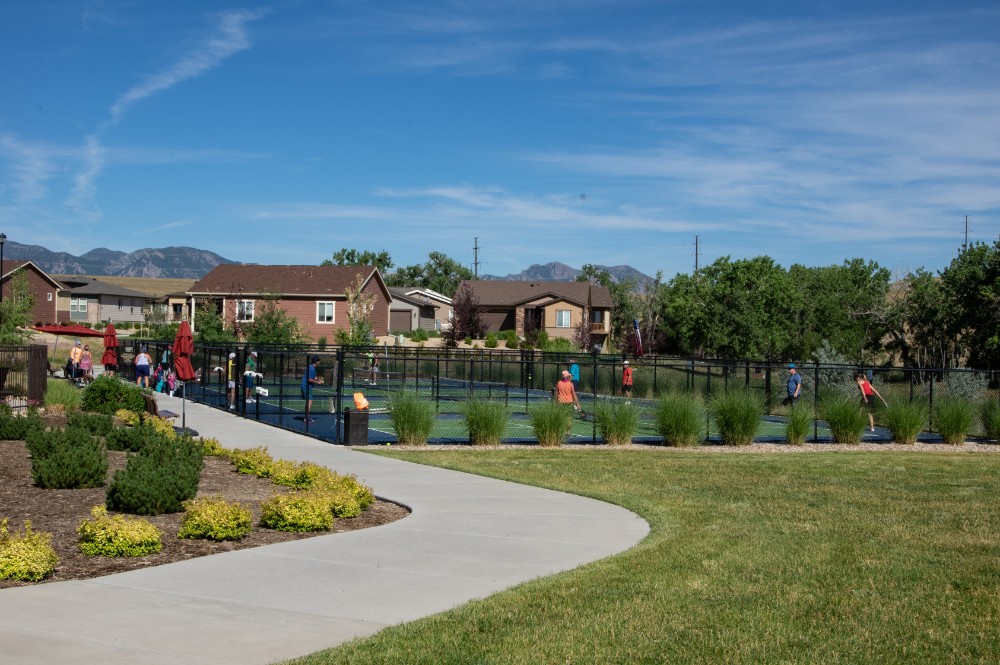
Uploaded by Khushal Habibi

Photo by Khushal Habibi

ARC Review Committee

Committee Members

Russell Heinen, Chairperson

Trudie Begier, Vice Chairperson

Nancy Steiner, Secretary

Nancie Connolly, Member

David Hofmann, Member

Alan Nichols, Member

The Architectural Review Committee (ARC)'s responsibilities are defined in its charter. The Design Review Committee was chartered in February 2018 for the purpose of assuring adherence to Governing Documents and establishing and overseeing community standards regarding Design Review Request applications for individual lots and community-owned facilities. The name was changed to Architectural Review Committee in November 2019 to reflect the transition to a homeowner Board. The committee reviews approximately 300 requests annually.


Future activities for the Architectural Review Committee include an effort led by members of the Villas Task Force to draft the revision of Section 22 of the Guidelines, "Supplemental Guidelines Pertaining to the Villas." The Committee will also initiate its annual review of the Guidelines over the next months. Committee members work with other committees as well as HOA staff.


The ARC meets the first Wednesday of each month 1:00-3:00 PM.  Most of the meetings are currently held over Zoom.  The reviews of requests are done collaboratively, but independently, through a computerized system.


If you'd like to volunteer for the ARC, please complete the ARC Committee Interest Form.  After you have completed the form be sure to save the file and then email it to the Community Manager at communitymanagement@skyestone.org. The Committee is currently looking for 2 volunteers.


To view the current Design Guidelines, please click here.
To submit a design review request, complete the Design Review Request Form

To submit questions to the Architectural Review Committee, please click here.

What does the ARC do?

Reviews requests for landscaping, improvements, and alterations on individual property.


What are the Types of Work Requiring Approval?

  • Landscape for entire lot;
  • Exterior additions, alterations, or modifications to existing homes;
  • All structures, including decks, patio coverings, pergolas, arbors, trellises and gazebos;
  • Exterior painting, unless painted in accordance with prior, approved paint scheme;
  • Pools and spas;
  • Walls and fences;
  • Landscape or decorative outdoor lighting;
  • Flagpoles;
  • Awnings;
  • Permanent, visible lawn accessories;
  • Removal of trees greater than 6 inches in diameter;


What are the Types of Work Not Requiring Approval?

Although not all-inclusive, the following are examples of some of the most common improvements which do not require approval as long as the improvements are done in accordance with the Design Guidelines:

  • Landscape improvements in the rear yard that are under 36 inches at maturity and are in addition to the original approved landscape plan;
  • Bulbs and annual flowers in the front yard;
  • Roof replacement or repair with materials matching the original materials installed by Builder;
  • Painting in accordance with original or prior, approved paint scheme;
  • Reconstruction in accordance with original construction plans of Builder;
  • Seasonal statues, artifacts, lighting and other decorative landscaping as allowed per Guidelines Sections 7.2, 7.5, and 20.14.


What are the Key Elements of a Request Submission?

  • Request Form: Ensure that a complete description of the following is provided:
  • Landscaping: Description of all varieties and the mature height and spread of trees and shrubs, with the location of each tree and shrub clearly delineated on the plan that also shows all utility easements. If an amendment to a previously approved landscape Plan, the existing trees and shrubs shall be clearly marked to differentiate them from new trees and shrubs that are proposed to be added. Removal of required trees or shrubs must be described as part of the submittal.
  • Hardscape Additions: Installation of brick, masonry, railroad ties, wood trim, concrete, rocks or other inert material should be clearly located and identified on Plan.
  • Drainage Changes: Proposals to alter the grade of the lot, the location of all drainage structures, and direction and slope of flow must be indicated on the Plan.
  • Home Additions or Exterior Changes: For exterior changes or additions to the structure, a plot plan and a copy of the floor plan with the proposed changes or additions to the exterior elevation drawn on the Plan; a description of the materials and colors. If the change or addition affects the roof or roofline, a roof plan should also be submitted.
  • Plot Plan: Drawn to scale showing the entire property (including all property lines) with the existing and proposed changes drawn on original plot plan.
  • City of Broomfield Building Permits: Homeowners are responsible for checking with City and County of Broomfield Building Department to determine if a permit is required.
  • Photos: The inclusion of photos of a property’s current landscape or home features as well as photos of similar work completed on other Skyestone homes will help provide a more complete submission.


What is a Plot Plan?

A Plot Plan is an architectural drawing that shows all the major features and structures on a piece of property which includes location of all buildings, porches, decks patios, landscape features, property boundaries as well as utility easements. They are available online from Broomfield County’s website.


What is the Response Period?

It is expected that a response is forwarded to homeowners within forty-five (45) days of receiving an application if all pertinent information is included in the submission.  Generally, reviews are completed within an average of 15 days.


What are Possible Results of a Review?

Upon completion of review, a letter shall be sent to the homeowner indicating an outcome:

  • “Approved”: The entire Design Review Request submitted is approved in total;
  • “Approved with Conditions”: The proposed work should comply with all identified conditions outlined by ARC;
  • “Not Approved”: The entire document submitted is not approved and no work may commence


Are Variances Possible?

Although the Guidelines address a broad range of exterior building and site conditions, they are not intended to be all-inclusive. Variances to these Design Guidelines may be permitted.  

Quick Links

Mission Statement

The Skyestone Community Association is committed to managing a quality active 55+ community for its residents through effective stewardship of our:


  • Finances
  • Governance
  • Lifestyle
  • Natural environment
  • Resident engagement
  • Resources
Photo by Joan Baker

Photo by Joan Baker

Core Values

  • Be Respectful
  • Demonstrate Trust & Integrity
  • Be Cooperative
  • Be Welcoming
  • Be Supportive & Caring
  • Be Inclusive & Transparent
  • Use Open & Clear Communication